Bedtime Procrastination Isn't a Discipline Problem. It's an Autonomy Problem.
Why every 'better sleep hygiene' tip fails founders, and what actually breaks the 1 AM scrolling loop.
April 19, 2026 · Updated April 20, 2026
title: "Bedtime Procrastination Isn't a Discipline Problem. It's an Autonomy Problem." description: "Why every 'better sleep hygiene' tip fails founders, and what actually breaks the 1 AM scrolling loop." slug: bedtime-procrastination-autonomy tags: [solopreneur, sleep, bedtime-procrastination, autonomy, rouse] category: mechanism persona: solopreneur readTimeMinutes: 6 publishedAt: 2026-04-19
Bedtime Procrastination Isn't a Discipline Problem. It's an Autonomy Problem.
It is 1:17 AM.
You are tired. You know you are tired. You can feel it behind your eyes. Tomorrow is going to be a wreck and you already know that too.
You keep scrolling anyway.
You are not even watching anything good. Reposted recipes you will not cook. A man in Utah building a shed with hand tools. A 14-second clip of a capybara. You are not relaxing. You are not enjoying this. You are doing something closer to defending a border.
Then you find a post on r/getdisciplined with 462 upvotes and a 0.99 ratio. The title is the entire problem, reduced:
"Nighttime is the only part of the day that's actually mine."
That is the crack. That is the whole thing.
You are not bad at sleep. You are running a hostage negotiation with your own schedule, and the 1 AM scroll is your ransom note.
In this post, you'll learn
- Why "revenge bedtime procrastination" is a self-reinforcing loop, not a bad habit
- The specific reason every "better sleep hygiene" article fails for founders
- Which side of the loop is actually fixable (it is not bedtime)
- What happens to the 1 AM scroll when the 6 AM alarm stops feeling like an ambush
6 min read.
Why this keeps happening
Here is what the research calls the behavior. Kroese and her team at Utrecht named it in 2014: bedtime procrastination is failing to go to bed at the intended time, in the absence of anything actually stopping you (Kroese et al. 2014). The pop-culture version on TikTok got tagged "revenge bedtime procrastination" around 2020, borrowed from a Chinese phrase about taking revenge on your schedule.
Both names describe the behavior. Neither explains the engine.
The engine is older. In 1966, a psychologist named Jack Brehm published a book called A Theory of Psychological Reactance. Brehm's claim, in one sentence: when humans perceive a threat to their autonomy, they push back, often by doubling down on the threatened behavior. Tell a kid she cannot have a cookie and watch her want the cookie harder.
Revenge bedtime procrastination is reactance pointing inward. The day felt like a cage. The only block of time left to push back in is after the calendar ends. So you push back.
A 2018 paper from Kamphorst's group bolted on the physiology (Kamphorst et al. 2018). By 11 PM, the part of your brain that would normally say "put the phone down" has been depleted by 15 hours of small decisions and restraint. You have the least self-control available at the exact moment you need it most. This is called executive-control depletion. It is not a personal failing. It is a clock.
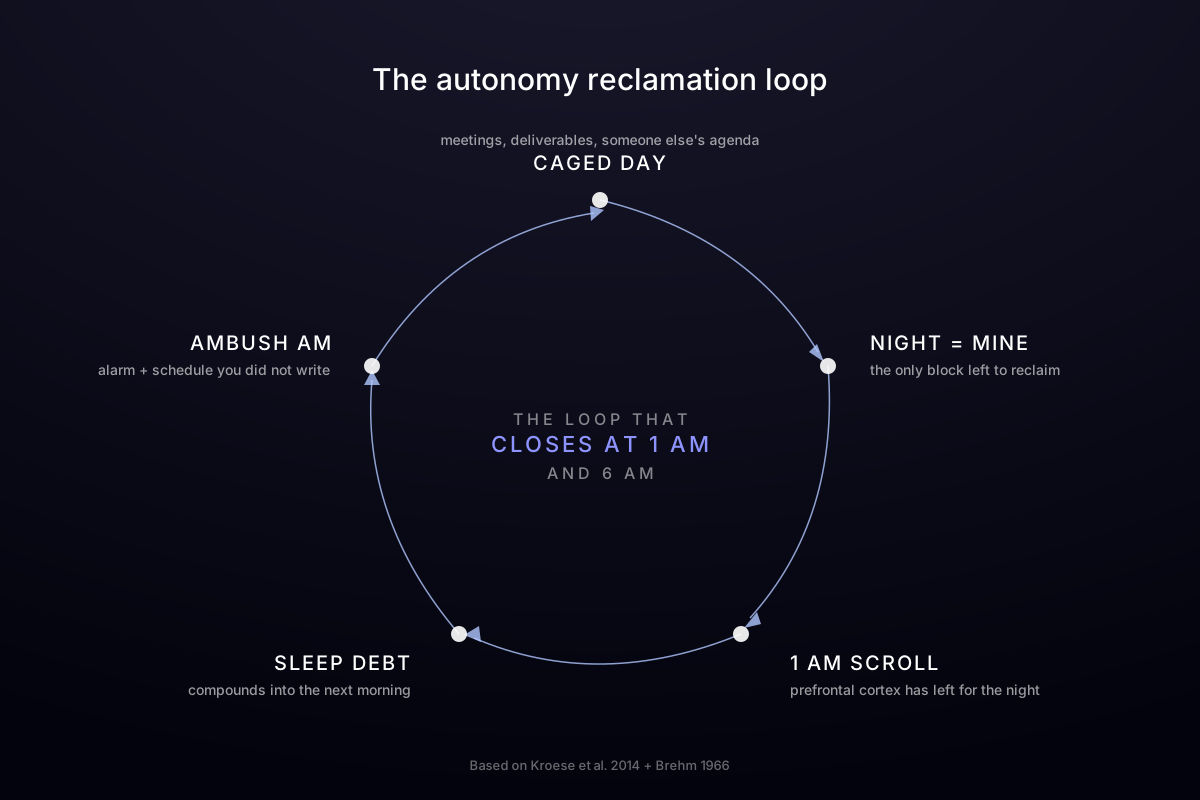
Put it together and the loop has six steps:
- Day feels low on autonomy (meetings, deliverables, someone else's agenda).
- Night is the only "mine" block left.
- Prefrontal cortex is depleted, so the "mine" block stretches past intent.
- Sleep debt accrues.
- The 6 AM alarm yanks you into the day that started feeling like someone else's the week you went solo.
- Loop restarts with the autonomy debt bigger than yesterday.
The loop is bidirectional. Most content you have ever read about this attacks step 3.
Why every bedtime fix fails founders
Every "revenge bedtime procrastination" article runs the same playbook. Phone across the room. Night Shift mode. Melatonin. Forest app. Wind-down routine. The 10-3-2-1 rule.
I have tried most of them. You probably have too.
They fail for the same reason threatening the cookie makes the kid want it more. These tactics are extra restrictions on the one block of the day that already feels rationed. They attack the symptom and strengthen the cause. The comment sections of these articles are a graveyard of people saying some version of I know all this. That is not the problem.
The top comment on the Reddit post I led with:
"Called revenge procrastination and is super common."
188 upvotes. Everyone knows the name. Nobody knows how to get out.
The reason nobody gets out: the advice all aims at the bedtime side of the loop, and for a founder, bedtime is the one side you cannot give up. It is the only block you control. Telling a founder to give it up feels like telling a hostage to stop wanting to escape.
Another commenter on the thread came closer than any blog I could find:
"Your brain associates nighttime scrolling with freedom, but you could experiment with flipping this. What if you gave yourself that mine-time right when you get home at 6pm?"
Warm. Still wrong side of the loop. Moving the mine-time to 6 PM just makes the 9-to-6 feel more like someone else's. The autonomy debt does not disappear. It reshapes.
The one side of the loop you can actually break
Here is what nobody writing about this seems to have noticed.
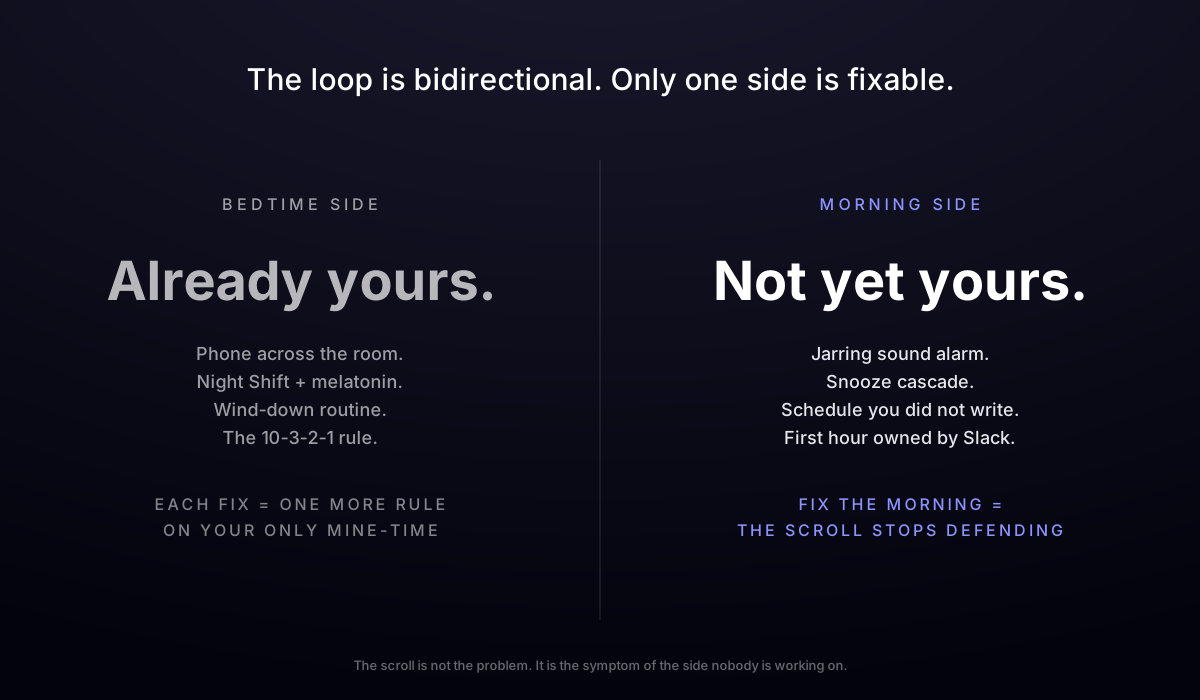
If the reason you cling to nighttime is that no other part of the day feels like yours, then every morning that starts with a jarring, reactive alarm confirms the thing your lizard brain already suspects: the day is not yours. Someone else sets the timer. Someone else owns the first hour. You grope for the snooze. You wake up on a schedule you did not write.
Tonight's scroll gets a little longer because of it.
The loop closes.
Now flip it. If the morning felt chosen, something interesting happens upstream in the cycle. The autonomy reclamation pressure drops. The nightly scroll has less work to do because the day is not starting out the door as someone else's property. You still wake up. You still have a calendar. But you wake up into a morning that is already yours, which means you have not spent the entire previous night trying to smuggle mine-time out of a day that never had any.
This is not a theory I invented. It is the obvious inversion of the Kroese paper, and nobody in the sleep-hygiene space has run with it because sleep-hygiene content wants to sell you a better bedtime.
What a chosen morning feels like
A chosen morning has two properties.
First, the wake-up is a conversation with your own intentions instead of an ambush. You are picking up where yesterday-you left off on something yesterday-you cared about. A startup. A book draft. A training block. A podcast. Anything with your name on it.
Second, the wake-up cannot be defeated by the version of you who is 40% conscious and cold. The snooze cascade is a lizard-brain win. A well-designed morning routes around the lizard brain until the prefrontal cortex is back online (for why that lizard-brain window is so unreasonable, see the 30-minute window where willpower is biologically unavailable).
This is the gap Rouse was built to fill. The alarm fires and you pick up a conversation with an LLM that has been briefed on your goals, your current projects, your why. It asks you about the thing you told it you cared about yesterday. You answer. It asks again. Five or ten minutes later the prefrontal cortex is back in the chair, the day has already started with you in the driver's seat, and the morning is categorically different from a sound alarm you swiped away at 6:02 AM and remember only as an interruption.
The product consequence is slower and more useful than any "download and transform" pitch. Over days and weeks, the night scroll has less work to do. There is already mine-time on the calendar. You do not need to smuggle it out of 1 AM.
FAQ
Is this the same as insomnia? No. Insomnia is the disorder where you want to sleep and cannot. Revenge bedtime procrastination is the inverse. You can sleep. You are refusing to. The mechanism is autonomy, not physiology.
Will a sleep-tracking app fix this? A tracker gives you more data on a problem you already know you have. The founder who scrolls until 1 AM is fully aware she is scrolling until 1 AM. Data is not the missing piece.
Does blue light actually matter? Probably a small amount. Not enough to break the loop. If it did, every article you have ever read on this would not open with it.
What if I genuinely do not have time during the day? That is the other mechanism, and it has a different fix. See the bedtime-side fix that turns into compounded sleep debt by day 8 for why sleep debt undoes the attempt to wake up earlier.
So
If you have tried every bedtime fix and none of them held, it is not a discipline problem. The mechanism you are fighting is older than discipline, and the wrong side of it is getting all the attention.
Try breaking the loop from the morning side for a week. Set a wake-up that you actually want to pick up, oriented around something that is yours. Then watch what the night scroll does when it has less to defend.
If you want to try the Rouse version, you can set it for tomorrow morning and let me know how it lands. I built this app because I was the guy scrolling at 1:17 AM. I would love the data point.