Your ADHD Alarm Doesn't Fail at Sound. It Fails at the Wall of Awful.
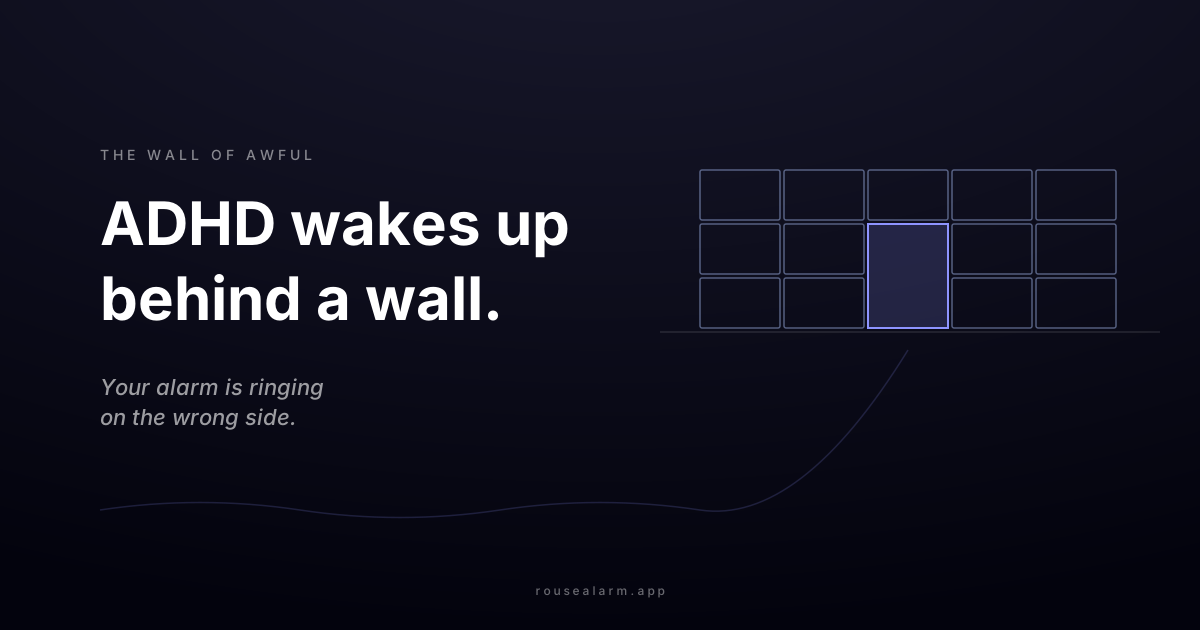
Brendan Mahan named it the Wall of Awful. ADHD mornings hit it first, every day, with executive function offline. Sound alarms knock on the wall. Conversations open a door.
May 7, 2026
Your ADHD Alarm Doesn't Fail at Sound. It Fails at the Wall of Awful.
The alarm is the easy part. The wall it has to ring through is the hard part.
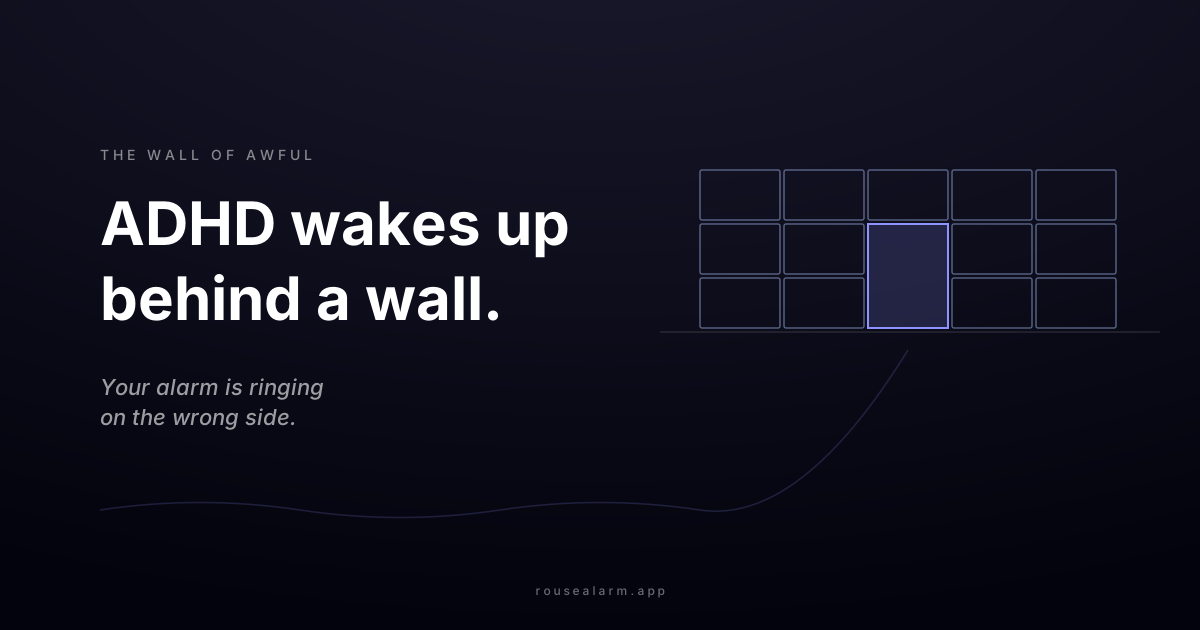
The first thing my brain hits in the morning isn't the alarm. It's a wall.
For most of my life I thought the alarm was the obstacle. Wrong layer. The alarm was easy. The hard part was the thirty seconds between the alarm and standing up, where my whole body felt like it was filed behind a stack of every previous morning that had gone badly.
Turns out there's a name for this stack.
It's called the Wall of Awful, and your sound alarm is ringing on the wrong side of it.
In this post, you'll learn:
- What the Wall of Awful actually is, and why ADHD adults wake up behind a bigger one than anyone else
- Why every previous failed wake-up adds bricks to tomorrow's wall, which is the real reason every alarm gets weaker
- Why a sound alarm is structurally on the wrong side of the wall, and what shape of tool puts a door in it
8 min read
The Wall of Awful is the part of your morning your alarm can't see.
Brendan Mahan, an ADHD coach and the host of ADHD Essentials, has been giving the same talk on this for years. The framing has spread because it explains something most ADHD adults already feel and have never had a clean word for.
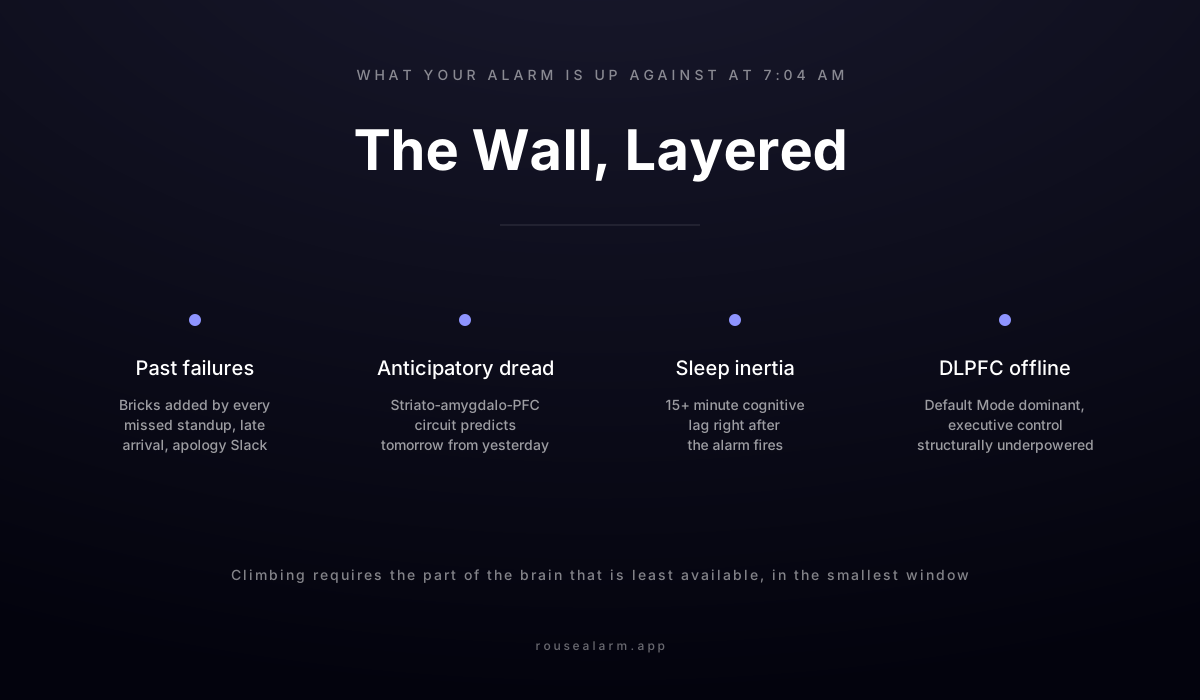
The Wall of Awful is the emotional barrier that prevents us from initiating tasks. It is built brick by brick out of past failures, disappointment, rejection, and shame around a specific task. Every time you fail at the same thing, you add multiple bricks. One for the failure itself. Some for the people you feel you let down. Some for the rejection you imagine waiting for you on the other side.
Everyone has a Wall of Awful. ADHD adults tend to have larger ones, because we fail at the same things repeatedly, in the same ways, with the same consequences.
Mornings are the densest wall most ADHD adults will ever stand in front of.
I didn't dread the alarm. I dreaded the part right after it. I'd lay there with my thumb already on the lock button, mentally re-running the last six times I'd been late, the partner-shouting-my-name morning, the manager who looked at his watch when I walked in. Then I'd snooze. Climbing the wall took more energy than I had at 7:04 AM, so I'd put it off for nine more minutes and pay the same toll again.
The clinical research underneath this is unusually clean. Shaw, Stringaris, Nigg, and Leibenluft's 2014 review in American Journal of Psychiatry is the canonical paper on emotional dysregulation in ADHD. The short version: emotion regulation is impaired across the ADHD lifespan, the circuitry involves the striato-amygdalo-medial prefrontal cortex network, and the impairment is real, neurally measurable, and not a character problem.
Mahan's wall is a clinical metaphor for what that paper measures.
It's not laziness. It's not low motivation. It's a brick-by-brick anticipation of how this morning is going to feel, weighed against an executive function system that is structurally harder to recruit at the exact moment you need it.
The reader who said "I feel broken" on every ADHD forum since 2010 was describing the wall.
Every previous failed wake-up is a brick in tomorrow's wall.
Here's the part nobody talks about. The wall isn't fixed. It's compounding.
Every morning you don't make it out of bed on time, you add bricks. The "I missed standup again" brick. The "I had to send another apologetic Slack" brick. The "my partner is doing the alarm-clock job again" brick. The "I'm going to be the person who oversleeps" brick. By Friday, the wall you're trying to climb is taller than the one you faced on Monday, and you're approaching it with the same morning brain.
Stack on top of that what your brain is structurally doing in those first 15 minutes after the alarm fires.
Tassi & Muzet 2000 is the sleep-inertia paper everyone in this space cites. The cognitive impairment in the first ~15 minutes after waking is severe. Hilditch & McHill 2019 is the modern review. Vallat and colleagues 2018 actually ran fMRI on the window and found the Default Mode Network dominant while the dorsolateral prefrontal cortex sits relatively offline. The DMN is the brain's internal-monologue, mind-wandering mode. The DLPFC is the seat of executive control.
That's the part of you Mahan is asking you to use to climb the wall.
It's the part that's least available, in the smallest window, on the morning when the wall is at its tallest.
I owned a $180 vibrating pillow for six weeks. The pillow worked. My body got the signal. I'd wake up, lay there with my face in a buzzing slab of foam, run through the past month of late arrivals, and reach for snooze. The alarm was doing its job. The wall was doing its job. They were operating on different problems.
This is the loop nobody warns you about when you buy a louder alarm:
- A failed morning adds bricks to the wall.
- The wall is bigger tomorrow.
- The same alarm has to scale a bigger wall with the same offline EF.
- Tomorrow fails.
- Add bricks. Repeat.
I wrote up a different angle on this same loop in why every alarm stops working after a week. That one's about habituation, the brain dismissing repeated stimuli as background noise. The Wall of Awful version is the emotional sibling of habituation. Sound habituates. Failure compounds. Same shape, different layer of the brain.
Predictable = dismissed. Compounded failure = wall.
A louder alarm doesn't shrink the wall. It just rings harder on the wrong side of it.
Sound alarms knock on the wall. Conversations walk through a door in it.
Mahan describes two ways through the wall. You can climb it, which costs frontal effort you might not have at 7:04 AM. Or you can put a door in it, which means changing the environment so the climb stops being the bottleneck. The clinical example he gives is body-doubling. A trusted person shows up to do the task with you, their presence regulates your emotion enough to start, and the climb becomes a step instead of a wall.
Body-doubling is a well-documented ADHD strategy. Cleveland Clinic has a writeup on why it works. The mechanism isn't mysterious. Another person's presence supplies external regulation for the activation step you can't generate alone. I wrote up the deeper version in why ADHD brains need presence, not sound.
Body-doubling at 5 AM has been impossible to productize. Until you change what an alarm is.
Here's what happens when an alarm is an LLM holding a voice conversation with you and won't shut off until you actually answer it back. The activation step isn't climb the wall and start your day. The activation step is answer one question. Answering a single question is something the language network does almost effortlessly, even when the rest of executive function is offline. Behavioral activation theory (Jacobson, Martell & Dimidjian 2001) calls this the action-precedes-mood loop: take any small action of the planned routine and the next one gets cheaper.
The first sentence is the lever the rest of the morning rotates on.
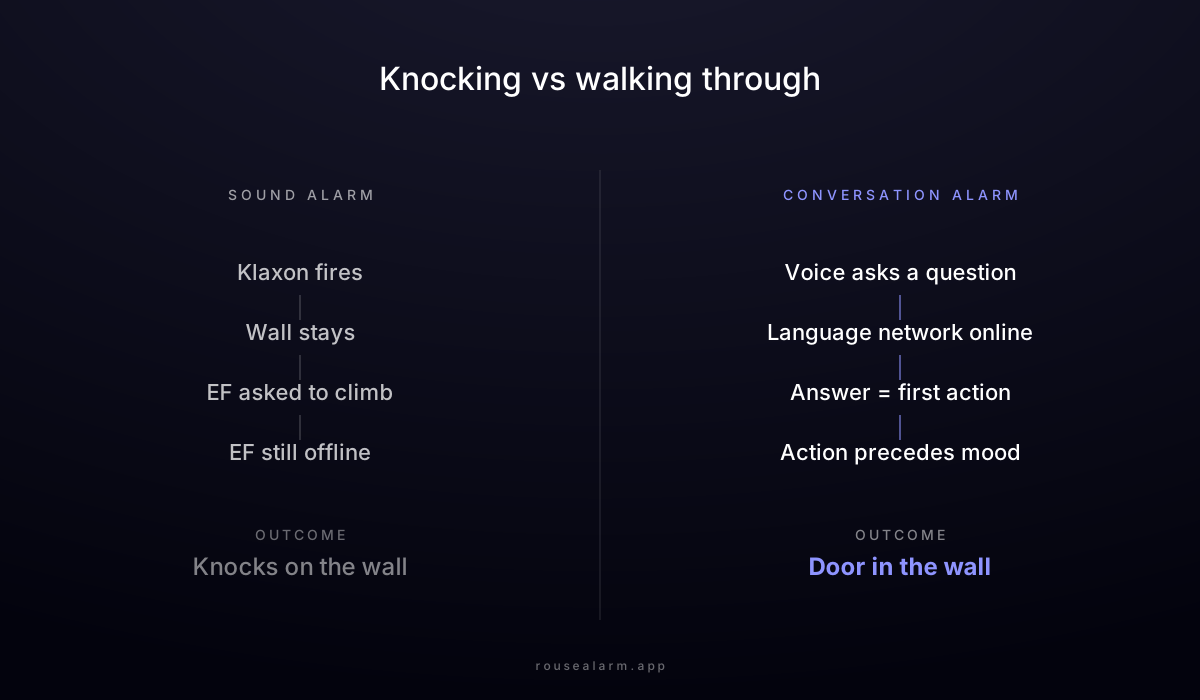
The first morning I tried this on myself, the sentence came out of my mouth before my brain had a chance to reach for the wall. I was already past it. Not because I had climbed anything, but because the question I'd been asked was so small that answering it didn't require the offline part of me to do any climbing at all. The conversation was the door.
That's the design constraint that led me to build Rouse: an alarm where the dismissal IS a conversation. There is no swipe. There is no math puzzle. The activation step is answer one question, the second voice in the room takes the body-double role Mahan describes, and the dismissal cannot be performed by the dissociated, sleep-inertial, activation-offline part of you that swipes everything else in your sleep.
I'm not saying Rouse shrinks the wall. The wall is built from things that already happened, and you can't unbuild bricks. I'm saying it puts a door in the wall, which is the only thing Mahan and the body-doubling literature actually claim works for an ADHD adult facing a wall this tall.
By the way, if this maps to you, you can try Rouse for a week and see. I'd love to know if it lands.
I'd also recommend reading why your alarm tells you what you already know right after this one. It's the cognitive sibling of this post. The Wall of Awful is the emotional reason "doing what you know" fails in the morning. Barkley's performance-not-knowledge framing is the cognitive frame. Two layers of the same problem, two reasons sound alarms have always been the wrong tool.
Closing
The shortest possible version of this whole post: ADHD mornings have been losing to the wrong obstacle. Sound alarms are a tool for waking a body. The Wall of Awful is for waking a person.
If you've already tried the usual suspects (Alarmy puzzles, two-alarm stacks, sunrise clocks), set Rouse for tomorrow morning and see what it feels like to have the alarm meet you on the other side of the wall instead of ringing on the wrong side of it.