Why every alarm stops working after ~7 days (habituation, explained)
Your brain categorizes predictable alarms as background noise within days. Here's how that trap works — and the one stimulus your brain can't tune out.
April 18, 2026
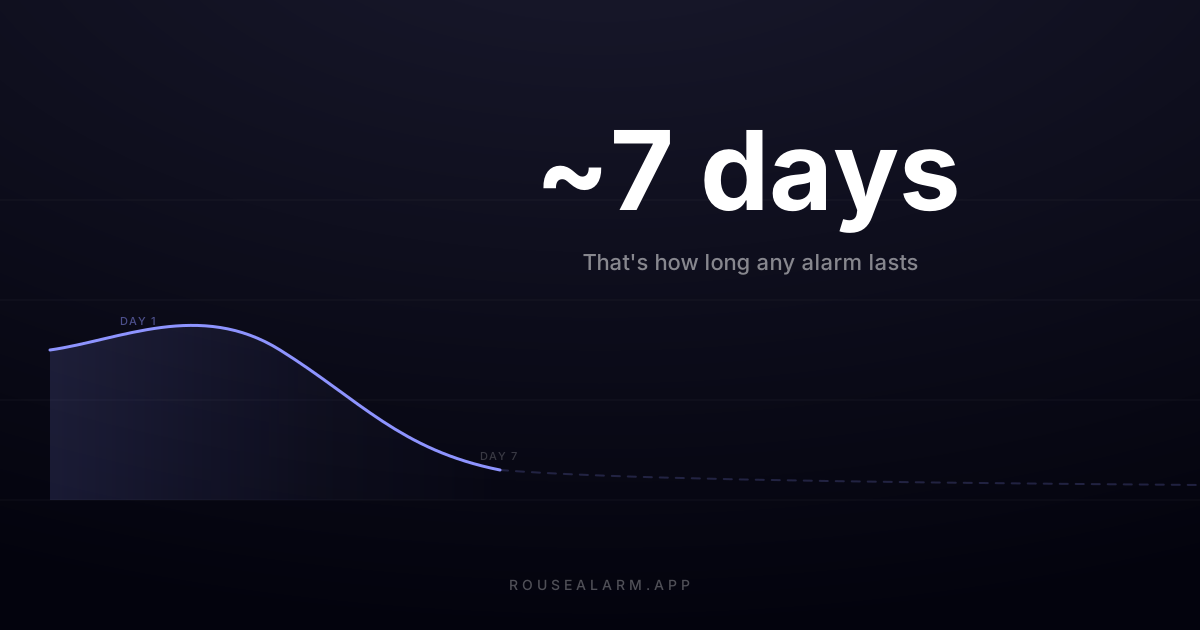
Why every alarm stops working after ~7 days (habituation, explained)
I slept through an air-raid siren. The same sound that jolted me awake on day 1 didn't register on day 6. I didn't even remember dismissing it.
Your brain didn't break. It did exactly what it's supposed to do.
Turns out there's a neurological name for this. And it's not about willpower.
In this post, you'll learn:
- Why your brain categorizes predictable alarms as background noise in days, not weeks
- The non-obvious reason ADHD brains hit this wall faster
- Why unpredictable conversation is the one stimulus your brain can't habituate to in a week
8 min read
Your brain treats predictable sounds like a ceiling fan
I own a Sonic Bomb. I own a $180 vibrating pillow. I own two sunrise clocks. I threw each one across the room because they all stopped working, not because they were bad products.
The alarm worked on day 1. By day 4, I was turning it off before the sound registered. By day 7, I didn't remember dismissing it at all. I'd wake up and my partner would tell me I'd already hit snooze five times.
Here's what was actually happening: your brain has a survival mechanism called habituation. It's designed to ignore predictable, non-threatening stimuli so you can sleep through safe sounds (a ceiling fan, traffic outside, your roommate's alarm).
Think about it. When you first moved to your place, could you hear the building's HVAC system? The hum of the fridge? The street sounds outside? Probably yes. Annoying, even. Now? You sleep through it.
Your brain categorized those sounds as "not a threat, repeats every time, not worth waking up for." So it turned down the volume. Not literally. Neurologically. Your brain stopped sending that signal to your conscious mind.
The same filter that lets you tune out the fan at 3 AM is the one that made the Sonic Bomb invisible by week two.
Predictable = background noise.
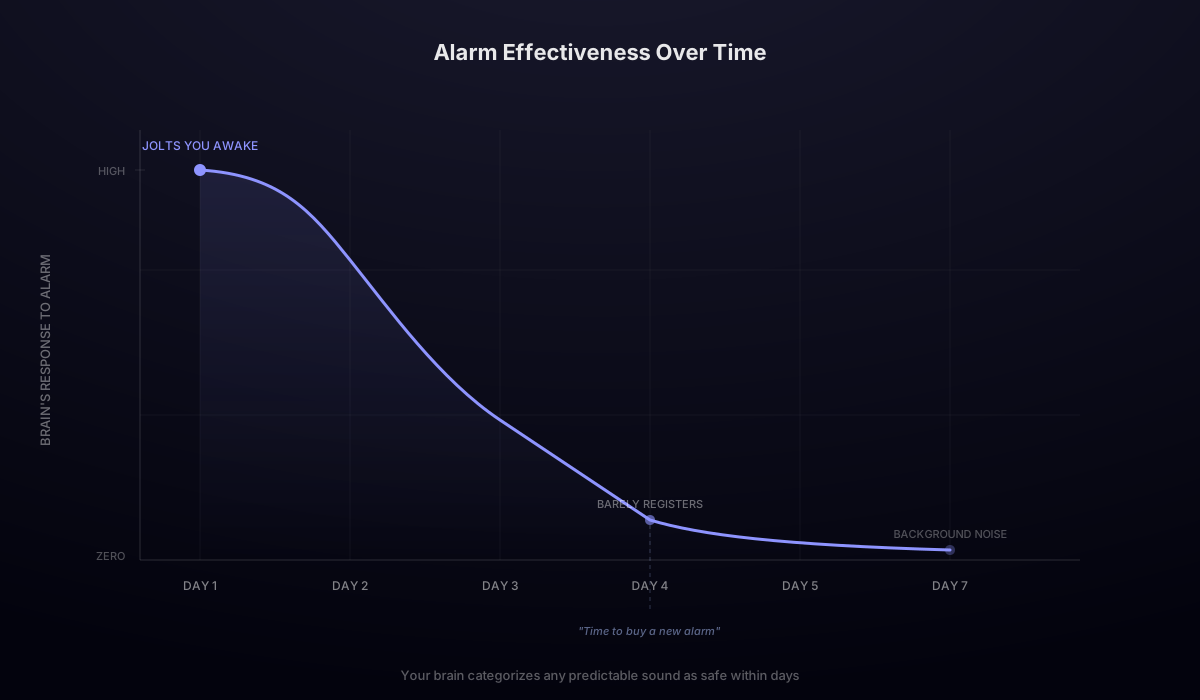
The mechanism isn't broken. It's just pointed at the wrong problem. Your brain evolved to ignore repeated safe sounds. Alarm clocks are repeated. Safe (they're not tigers). So your brain does its job.
This is the part most people get wrong. You don't choose to tune out the alarm. You don't snooze because you lack discipline. Your brain filters it out the same way it filters out the ceiling fan. Conscious will has almost nothing to do with it.
Now you know why the alarm graveyard happened. It wasn't willpower. It was wiring.
Delayed circadian phase makes ADHD brains hit this wall faster
Here's where it gets specific to ADHD.
About 75% of ADHD adults have a delayed circadian phase. Their melatonin peaks 1 to 2 hours later than most people's. When your alarm fires at 6 AM, your brain is still in the deepest part of sleep. Not the light stage where you're supposed to be. Not the stage where a sound registers as a real threat.
You're deeper in survival mode. The body is in deep delta-wave sleep, the stage where your brain processes threat as a baseline. An alarm sound hitting a brain in deep sleep looks exactly like what it dismisses: a safe, repeated, predictable threat.
So habituation doesn't take 10 days. It takes 3. Maybe 4.
That's not you being broken. That's circadian rhythm physics meeting neurological habituation at the exact wrong time of night. The combo is devastating.
Most people call this "alarms don't work for me." What it actually is: your brain's circadian rhythm puts you in the exact state where habituation kicks in fastest. Deep sleep. Predictable sound. No threat perception. Perfect conditions for your brain to say, "I can ignore this."
And it does. By day 3.
The wall came sooner because of neurology, not character. Not laziness. Not willpower deficit. Your brain's sleep architecture plus the time you set the alarm created a scenario your brain was built to ignore.
Conversation is the one stimulus your brain can't habituate to
Then my dad called right before my alarm one morning.
I woke up instantly. Completely alert. I even sounded fresh on the call, despite the fact that I'd been asleep thirty seconds before. My brain didn't filter it. It snapped to attention because language isn't a predictable sound. It's a threat that requires immediate social processing.
Why?
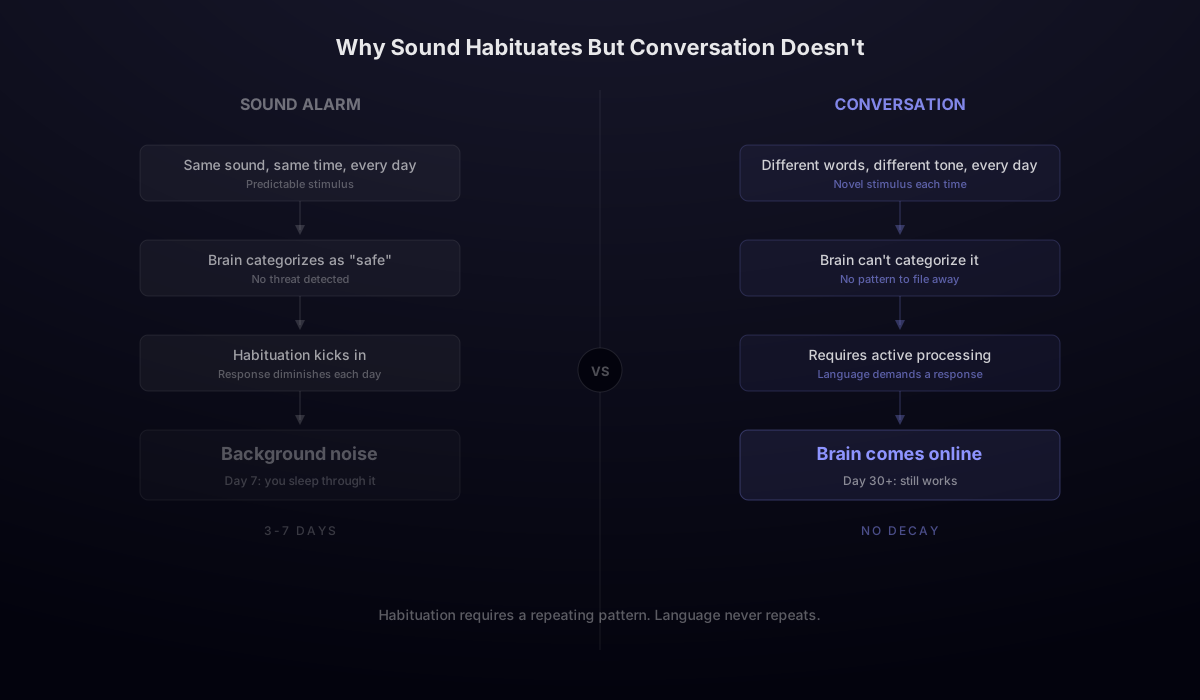
Language is novel every time. Syntax changes. Content changes. Phrasing changes. Tone changes. Your brain can't pattern-match a conversation the way it pattern-matches a siren, because there is no pattern. Each utterance is different.
A siren is the same siren. You categorize it, file it, ignore it. A voice is never the same twice. Every sentence is new information your brain has to process in real time to understand context, intention, and response.
Novel = unignorable.
Your brain evolved to wake up to social sounds: voices, conversations, someone shouting your name. For hundreds of thousands of years, missing social information was dangerous. A voice could be a warning. A call could mean survival.
Language is unpredictable by design. So your brain can't tune it out. Habituation doesn't apply to novel information. The brain can't file away something it hasn't categorized yet.
That's why Rouse uses conversation instead of sound. It's the one stimulus your brain can't categorize as background noise. Not in a week. Not in a month. The LLM is different every time you interact with it. You're not fighting an algorithm. You're processing language in real time, which means you're awake. Which means you're engaged.
Your alarm didn't stop because you're broken. It stopped because your brain did its job on the wrong stimulus. With the wrong timing. Against the one opponent it was built to win against.
Closing
If you've already thrown everything else across the room (the Sonic Bomb, the $180 pillow, the sleep-cycle app), then you've already proved the pattern. Your brain wins the habituation game every time.
You understand now why that is. Not character. Not discipline. Neurology winning a game your alarm was never built to play against.
But conversation is a different game. Language is the one stimulus your brain can't dismiss as background noise. Not after a week. Not after a month. Not ever, really, because conversation is never the same twice.
Set Rouse for tomorrow morning. I'd love to know if it lands.